

In manufacturing, delays rarely start on the production floor. They start earlier, in hiring. As demand increases and timelines tighten, many organizations struggle to build the workforce needed to support what comes next. Skilled roles remain open longer, pipelines are limited, and internal teams are expected to deliver under pressure.
The challenge is not just volume, but the difficulty of hiring highly skilled manufacturing talent within tight timelines. These roles require precision, experience, and often niche expertise. When they remain unfilled, the impact goes beyond HR metrics. It affects production schedules, revenue targets, and operational risk.
Many organizations reach a point where traditional approaches to manufacturing recruitment services are no longer enough. That is where Project RPO comes into focus.
Why Hiring Skilled Manufacturing Workers Has Become a Bottleneck
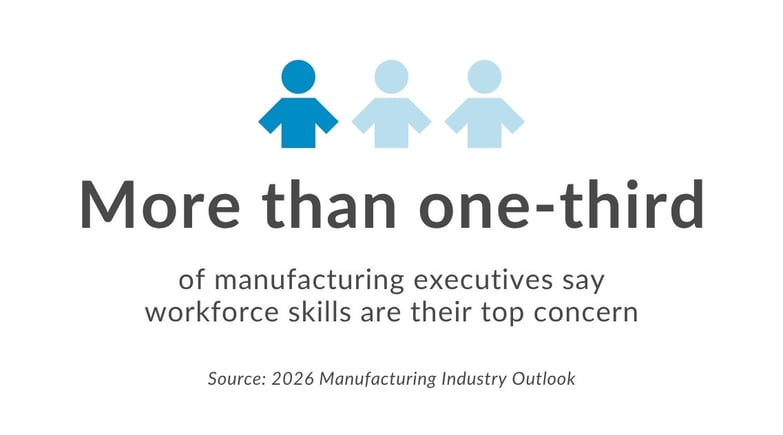
Manufacturers are not short on demand. They are short on access to the right talent at the right time.
The broader market is making this more difficult. Investment in manufacturing is increasing, driven by policy incentives, infrastructure demand, and continued growth in sectors such as semiconductors and energy. At the same time, reshoring efforts are accelerating, bringing more production back into domestic markets and increasing demand for skilled talent in already tight labor pools.
Several factors are compounding the challenge:
- Tight labor markets: Competition for qualified candidates remains high due to a constrained talent pool and increasing demand, with fewer active job seekers available for critical roles.
- Rising investment and expansion activity: New incentives and large-scale investments are driving hiring demand across multiple regions at once.
- Reshoring and supply chain shifts: As more production is brought closer to home, the need for skilled workers increases, putting additional strain on local labor markets.
- Limited internal capacity: Talent acquisition teams are often lean and already managing ongoing hiring needs.
- Reactive hiring patterns: Many organizations rely on inbound applications or last-minute hiring pushes, which slows progress.
At the same time, workforce planning is becoming harder to predict. Demand can shift quickly based on project timelines, while hiring and onboarding still require long lead times.
For talent acquisition leaders, this creates constant pressure to deliver faster results without compromising quality. Hiring managers expect progress, but pipelines take time to build. Internal teams are stretched, and existing approaches struggle to keep up.
It is not surprising that many organizations begin searching for a manufacturing recruitment partner that can bring both capacity and execution discipline to the process.
What Is Project RPO and Why It Fits Manufacturing Hiring
Project RPO is a targeted recruiting solution designed to support specific hiring initiatives. Instead of outsourcing all recruitment or relying on multiple agencies, organizations engage a dedicated team to deliver hiring outcomes for a defined project.
In manufacturing, that typically includes:
- New facility launches
- Production ramp-ups
- Large-scale hiring for specialized roles
- Backfilling critical skill gaps during transformation initiatives
Unlike traditional models, Project RPO is built for speed and alignment. The team integrates with your existing processes, systems, and hiring managers, operating as an extension of your internal function rather than a separate vendor.
This model is particularly effective for engaging manufacturing talent because it aligns directly with how hiring demand occurs: in waves tied to business initiatives, not as a steady, predictable flow.
Why Traditional Recruiting Models Fall Short
When hiring demand spikes, many organizations default to agencies or try to stretch internal teams. Both approaches have limitations.
Internal teams are often already managing ongoing hiring needs. Adding a large project on top of existing responsibilities leads to slower time-to-fill and increased pressure across the team.
Agencies can help with individual roles, but they are not designed to manage coordinated hiring across positions with shared timelines and requirements. This often results in inconsistent candidate quality, duplicated effort, and limited visibility into progress.
For procurement and HR leaders, this also creates complexity. Managing multiple vendors increases cost variability, introduces risk, and makes it harder to measure ROI across the hiring process.
Project RPO offers a different approach by consolidating hiring into a single, accountable solution.
How Project RPO Enables Faster Hiring in Manufacturing
Speed in hiring is not just about moving quickly. It is also about removing the friction that slows progress at each stage of the process.
A well-executed Project RPO model addresses this in several ways:
Dedicated Recruiting Capacity
A project-based team is assigned specifically to your hiring initiative. This removes the bottleneck of competing priorities and ensures consistent focus on delivery.
Proactive Talent Sourcing
Instead of relying on inbound applications, recruiters actively map the market, engage passive candidates, and build pipelines tailored to your roles. This is critical when hiring skilled manufacturing workers who are not actively job searching.
Process Standardization
From screening to interview coordination, workflows are structured to reduce delays and improve consistency. Hiring managers receive qualified candidates faster, with clear expectations on timelines and feedback loops.
Real-Time Visibility
Centralized reporting provides insight into pipeline health, time-to-fill, and hiring progress. This allows leaders to make informed decisions and adjust quickly if needed.
Alignment with Project Timelines
Recruiting activity is planned around your operational milestones. Whether the goal is to staff a facility within a set timeframe or ramp production capacity in phases, hiring efforts are coordinated accordingly.
This combination of focus, structure, and scalability is what enables fast hiring for manufacturing talent without sacrificing quality.

The Business Impact of Getting Hiring Right
When manufacturing hiring is aligned with business needs, the impact is immediate and measurable.
- Faster time-to-productivity: Roles are filled in time to support production schedules.
- Reduced operational risk: Critical positions are not left open during key phases of expansion.
- Improved candidate quality: Targeted sourcing ensures candidates meet technical and cultural requirements.
- Lower overall cost: Consolidated hiring reduces reliance on multiple agencies and improves cost predictability.
For HR leaders, this also supports broader goals around consistency, compliance, and workforce planning. For procurement, it introduces clearer cost models and reduces vendor complexity.
When to Consider Project RPO
Not every hiring challenge requires a new model. However, there are clear signals that indicate it may be time to consider Project RPO.
- You are launching a new facility or expanding production capacity
- Time-to-fill for skilled roles is increasing
- Internal teams are stretched and unable to scale
- Agency usage is growing without consistent results
- Hiring delays are beginning to impact operations
These situations are common in advanced manufacturing environments where demand shifts quickly and talent supply remains constrained.
Choosing the Right Manufacturing Recruitment Partner
The success of a Project RPO engagement depends heavily on the partner you choose. Experience in manufacturing is essential.
Look for a partner that can demonstrate:
- Deep understanding of manufacturing roles and skill requirements
- Proven ability to deliver within tight project timelines
- Transparent reporting and measurable outcomes
- Integration with your existing systems and workflows
- A structured approach to compliance and risk management
A strong partner does more than fill roles. They bring market insight, operational discipline, and the ability to execute at pace.
Moving from Bottlenecks to Momentum
Hiring challenges in manufacturing are not going away. As technology advances and demand for skilled talent increases, the gap between hiring needs and available talent will continue to widen.
Organizations that rely on traditional approaches often find themselves reacting to delays rather than preventing them. Those that adopt more scalable hiring solutions for manufacturing are better positioned to keep pace with business growth.
Project RPO provides a practical way to bridge that gap. It brings together dedicated capacity, industry expertise, and structured delivery to ensure hiring keeps up with operational demands.
For manufacturing leaders facing expansion timelines and talent shortages, the question is no longer whether change is needed. It is how quickly the hiring model can adapt to meet the moment.
Want to Understand How Quickly You Could Close Your Hiring Gaps?
LevelUP works with manufacturing teams to build project-based recruiting strategies aligned to real timelines and workforce needs. Start a conversation to see what a Project RPO approach could look like for your next initiative.